
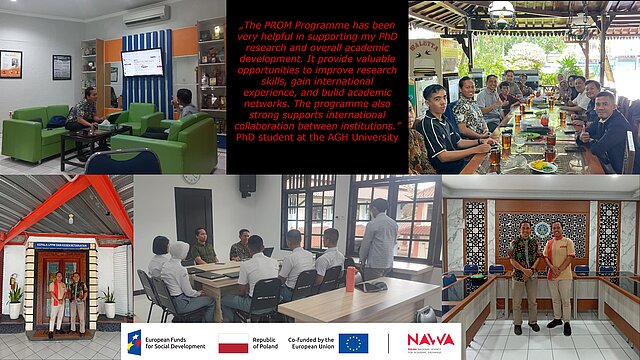
During his stay, he conducted experiments in the field of large-scale hybrid optimisation using GPU acceleration and solved architectural and computational problems in real time. He also worked closely with scientists from UAD under the supervision of Prof. Anton Yudhana. This period provided direct access to research infrastructure, enabled the implementation of coordinated experiments and the preparation of packages allowing the reproduction of results, and facilitated the generation of publication-quality data and results.
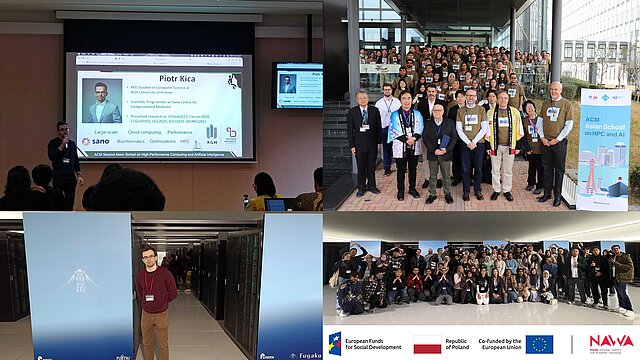
During the school, the PhD student gained valuable knowledge about HPC systems and their applications, particularly the use of artificial intelligence in the context of HPC and in biomedical applications. In addition, many sessions included hands-on exercises using specialized software and one of the world’s most powerful supercomputers, Fugaku.
The school also provided an opportunity to establish contacts with the international scientific community and enabled discussions of research topics with renowned researchers.
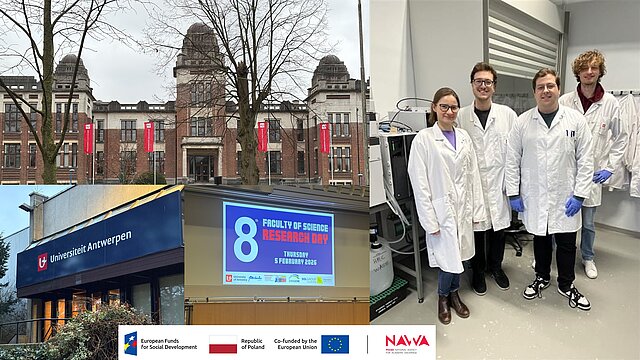
During the internship, the student became familiar with the technique of high-performance liquid chromatography (HPLC), performing both qualitative and quantitative measurements of samples of various origins. The Student also participated in the preparation and optimization of microfluidic detectors consisting of multiple electrodes for biomedical applications. In addition, the Student was involved in the optimization of the electrochemical reduction of explosive materials in order to improve their detection capabilities. Furthermore, the Student participated in the preparation and measurement of samples containing a point mutation in the DPYD gene analyzed using a photoelectrochemical method.
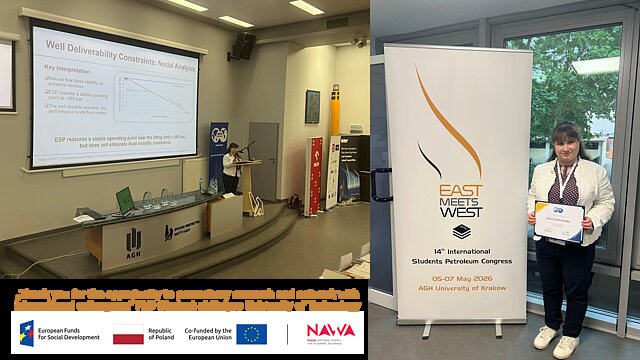
During the conference, the PhD student delivered a presentation entitled “Revitalising Deep Oil Reservoirs in the Dnieper-Donets Basin: Integrated Modelling and Methodological Framework for Heavy Oil Recovery Optimisation in Ukrainian Fields”. Participation in the event allowed her not only to present her research findings and engage in constructive discussion of the results obtained, but also to establish new academic contacts with researchers from the AGH University.
The PROM – Short-Term Academic Exchange Programme is financed by the European Union under the project “Short-Term Academic Exchange as a Means of Improving the Quality of Education in Higher Education and Research Institutions” (Project No. FERS.01.05-IP.08-0218/23).
#FunduszeUE

